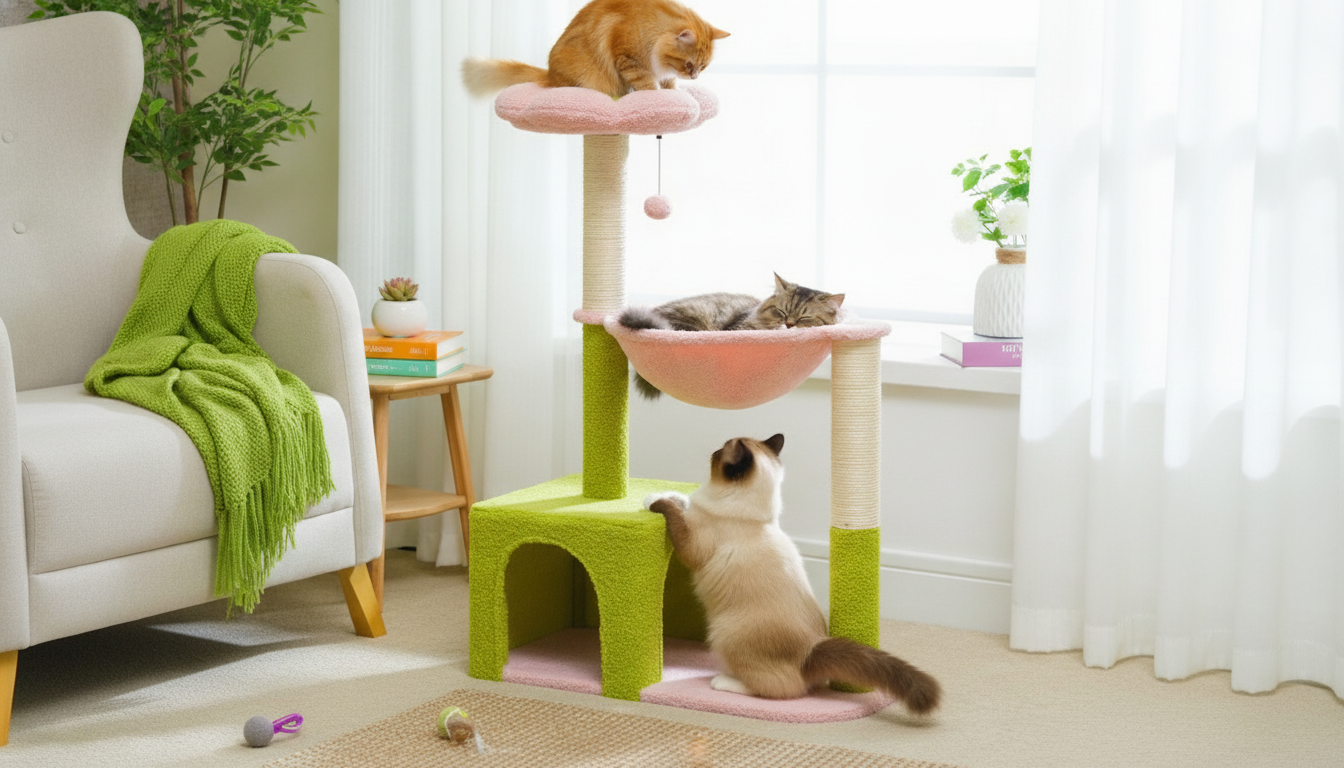
A cat tree that looks playful and feels sturdy can make a real difference in daily lounging, climbing, and napping. This flower-styled cat tree pairs a cozy perch with a metal-framed hammock-style bed, aiming to give cats a stable place to relax while fitting naturally into home decor. For many homes, it’s the sweet spot between “cat furniture” and “living room friendly,” without taking over the whole space.
If you’re building a more cat-supportive environment, organizations like International Cat Care emphasize the value of providing resting spots, vertical options, and safe observation points. A compact tree with a comfortable hammock can check several of those boxes at once.
Most cat trees lean into boxy platforms, straight lines, and tall tower silhouettes. A flower-inspired design shifts the vibe: softer curves, a more decorative look, and a visually lighter presence—especially helpful in smaller rooms or apartments.
Many cats naturally curl into rounder spaces, tucking paws and tail for warmth and comfort. When a perch feels “cupped” rather than flat, it can become the go-to nap spot—particularly for cats that like to snooze in laundry baskets or circular beds.
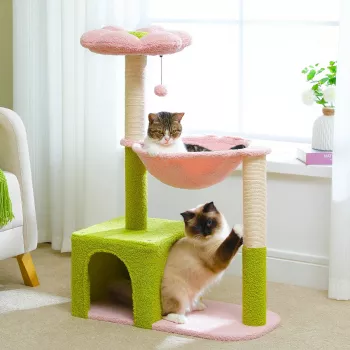
The hammock is often the most-loved part of a cat tree—and also the part that takes the most daily load. A metal frame hammock can offer a more defined structure than a soft sling alone, which may help the bed feel stable as cats hop in and out.
| Hammock type | Common benefits | Things to check before buying |
|---|---|---|
| Metal frame hammock | More structured support; often feels steadier | Connection points, fabric tension, weight limit guidance |
| Soft sling hammock (no frame) | Lightweight; cozy cradle feel | Sagging over time, stretching seams, secure mounting |
| Flat platform bed | Simple; easy for older cats to step onto | Cushion grip, edge height, surface traction |
Cats rarely use just one “favorite” spot all day. They rotate between lookout perches, warm corners, and comfortable cradles depending on mood, household activity, and temperature. A cat tree works best when it supports that natural rotation.
If your cat likes to watch birds or neighborhood activity, placing the tree near a window can turn it into a daily “cat TV” station. For shy cats, positioning it where they can observe the room without being in the center of foot traffic can increase use.
General cat care guidance from the ASPCA also highlights how routine comfort and a low-stress home setup support overall well-being—simple improvements like consistent rest areas can go a long way.
| Task | How often | Why it helps |
|---|---|---|
| Quick vacuum/brush | 2–3x per week | Reduces shedding buildup and odor |
| Inspect bolts/fasteners | Monthly | Keeps the structure steady and safe |
| Check hammock attachments | Monthly | Prevents sudden sagging or loosening |
| Deeper clean (as applicable) | Every 1–2 months | Helps manage dander and allergens |
For deeper cleaning, a targeted tool can help refresh fabric and seams without soaking everything. The Handheld Steam Cleaner can be useful for periodic sanitizing (always allow surfaces to fully dry before your cat uses the hammock again, and follow the device instructions for fabrics).
If you like keeping a small cleaning station nearby, the Elegant Handmade Ceramic Soap Dish can be a tidy place to hold a pet-safe soap bar or sponge for quick spot-clean touchups.
| Item | Details |
|---|---|
| Name | Flower Cat Tree with Large Metal Frame Hammock |
| Price | 45.51 USD |
| Availability | In stock |
| Best use | Lounging, perching, and cozy hammock naps |
It can be safe when the tree is assembled correctly and the attachment points stay tight and intact. Follow any weight guidance provided by the seller and do quick monthly checks of bolts and hammock connections to prevent loosening.
Place it on a grippy mat or rug pad, make sure the base sits flat without rocking, and tighten fasteners after the first week of use. Positioning the tree near a wall or in a corner can also reduce side-to-side sway during jumps.
Vacuum or brush it frequently to remove hair, then spot-clean with a gentle pet-safe method and let it dry completely. Avoid harsh chemicals, and test any cleaner on a small hidden area first to prevent discoloration or fabric damage.










Leave a comment