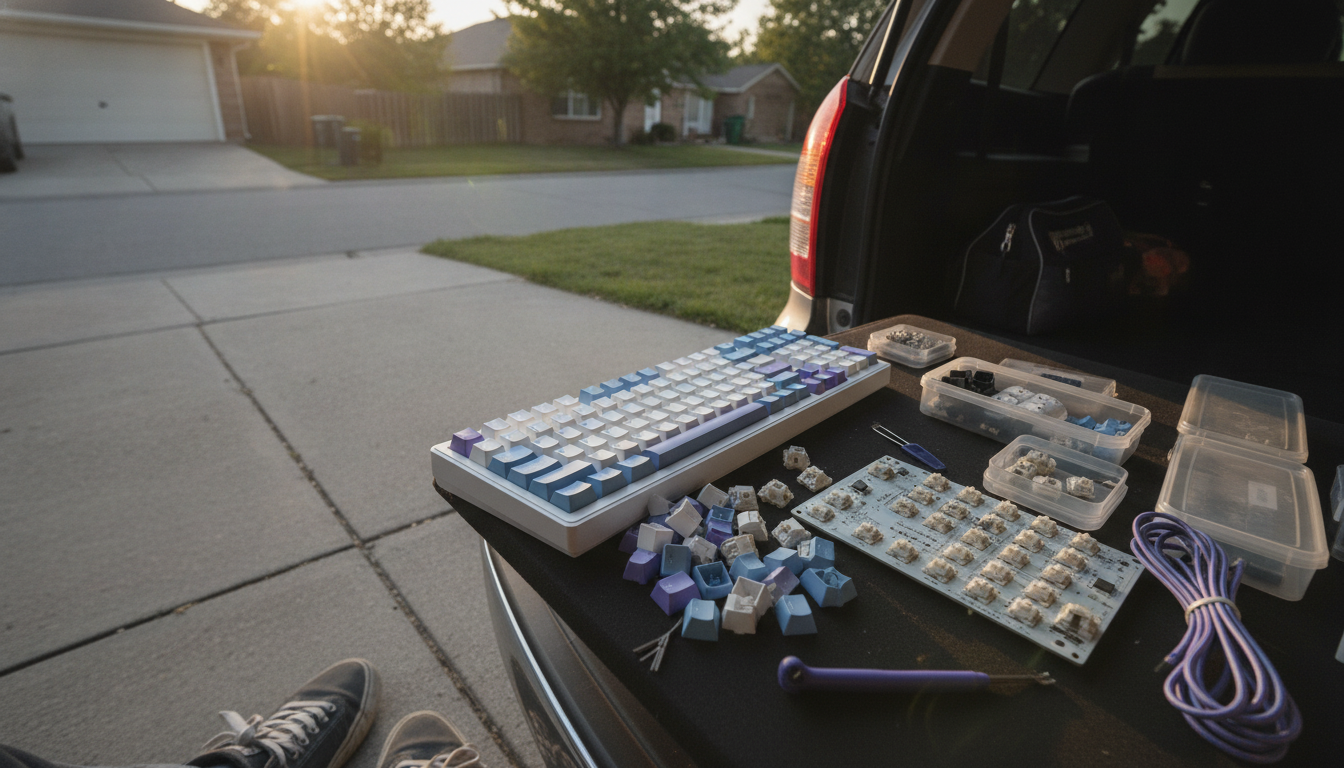
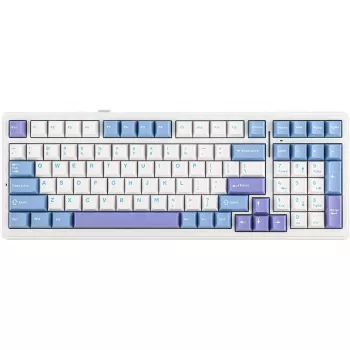
Sometimes—but not automatically. A gasket-mounted keyboard describes how the plate and PCB are suspended (typically on compressible gaskets) to change typing feel and acoustics. Hot-swappability, on the other hand, depends on whether the PCB uses hot-swap sockets that let you install or remove switches without soldering.
The deciding factor is the PCB. If the PCB has hot-swap sockets (commonly Kailh-style or similar), the board is hot-swappable regardless of whether it’s tray mount, top mount, or gasket mount. If the PCB is solder-only, then even a premium gasket build will require soldering to change switches.
Look for product specs that explicitly say “hot-swappable” or “hot-swap PCB.” If specs are unclear, check photos for visible hot-swap sockets on the back of the PCB, or confirm whether the keyboard is offered in “solder” and “hot-swap” variants. Many gasket kits come in both options, so the mount style alone won’t tell you.
Gasket-mounted keyboards are frequently marketed to enthusiasts who like experimenting with different switch types and tuning combinations (plates, foams, stabilizers). Hot-swap PCBs fit that use case well. Still, some gasket boards prioritize a specific sound profile or cost target and ship with solder-only PCBs.
For practical examples and a more detailed explanation of how these features overlap, see the full guide here: https://excluser.com/are-gasket-keyboards-hot-swappable/.
For Gasket Keyboards: When Are They Actually Hot-Swappable?, the best answer depends on fit, material, care instructions, and how the product will be used day to day.
Gasket mount refers to the keyboard’s internal mounting method that affects feel and sound. Hot-swap refers to switch installation using sockets so you can change switches without soldering.










Leave a comment